Manufacturers that audit their products for reclassification opportunities under the U.S. Harmonized Tariff Schedule are reaping significant cost savings, said Venky Ramesh of AlixPartners.


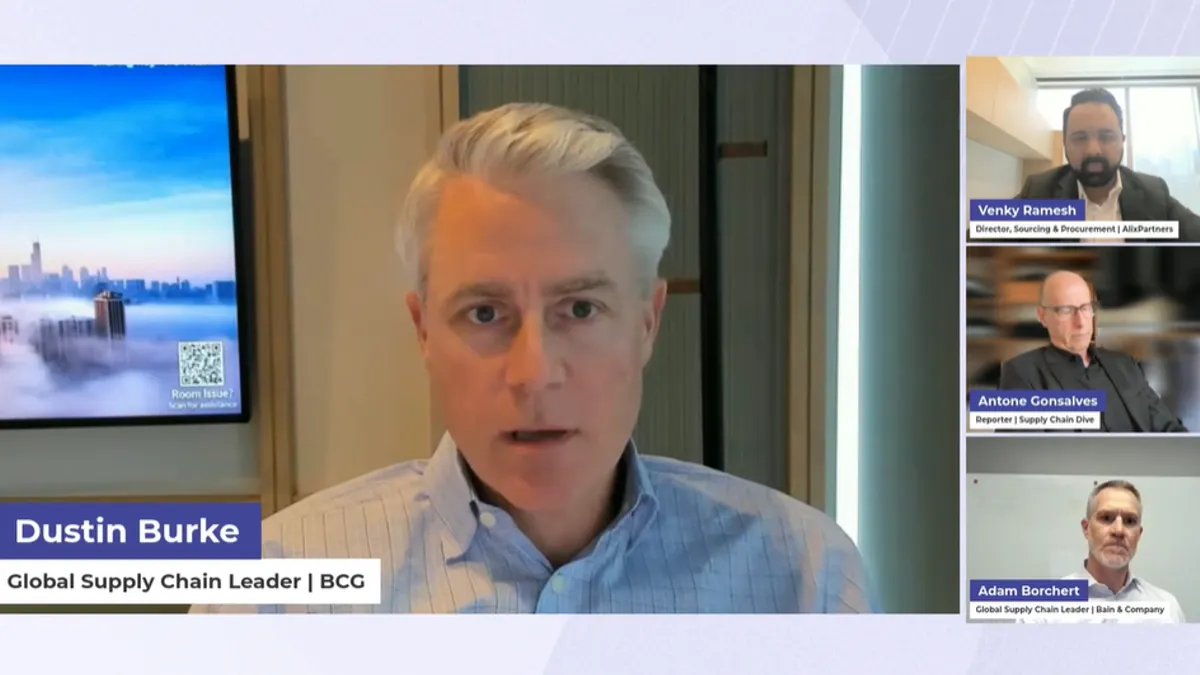
Editor’s Note: This story is part of a series highlighting takeaways from a July 23 event hosted by Supply Chain Dive, Manufacturing Dive, Trucking Dive and Packaging Dive. Register here to watch the replay on demand.
As tariff volatility continues to disrupt trade and commerce, companies are looking for effective ways to navigate the shifting backdrop.
Many are leveraging the latest technologies for enhanced decision-making and visibility into their supply chains. However, sometimes the best solutions can be relatively simple.
For example, regular monitoring of the U.S. Harmonized Tariff Schedule, a system used to classify traded goods, can yield significant cost savings opportunities, panelists said during sessions at Supply Chain Dive’s July 23 event, “Supply Chain Outlook: Trends and Risks to Watch in 2025.”

Venky Ramesh, director of sourcing and procurement transformation at business advisory firm AlixPartners, said he knew of a Vietnam-based battery manufacturer that recently lowered the duty rates of its exported goods from 55% to 30% by reclassifying to another eligible tariff code.
Previously, the company was importing its batteries into the United States under the HTS code for electric vehicles. Following an audit, Ramesh said the manufacturer realized it could legally switch certain products to a different classification with a lower duty rate. This is because the batteries are not just used for EVs, but for general power storage as well.
“Regular HTS auditing sounds a little boring, not that exciting, but it can sometimes make a huge difference,” Ramesh said.
Monitoring the tariff codes for updates is also key from a competitive standpoint. Adam Borchert, partner at Bain & Co., said it becomes an “important game” when sourcing from multiple suppliers or geographical regions.
“The moment that the tariff code changes and it’s [different] across your suppliers, it gives you the chance to be more responsive and take advantage of the changes,” Borchert said.
Beyond diligent monitoring, companies across the supply chain are leveraging artificial intelligence and machine learning tools for scenario modeling as a way to prepare for anticipated tariff disruptions.
With AI-driven technology, they can forecast what would happen to demand if they were to pass-through all of the tariff costs versus half to the customer, among other scenarios, said Dustin Burke, global supply chain leader at Boston Consulting Group.
Companies can also analyze their supply chain configurations, manufacturing footprint and supplier mix to see what areas are more robust under a range of potential outcomes, Burke added.